Hays upgrades its employees’ AI toolbox with Microsoft 365 E7 rollout
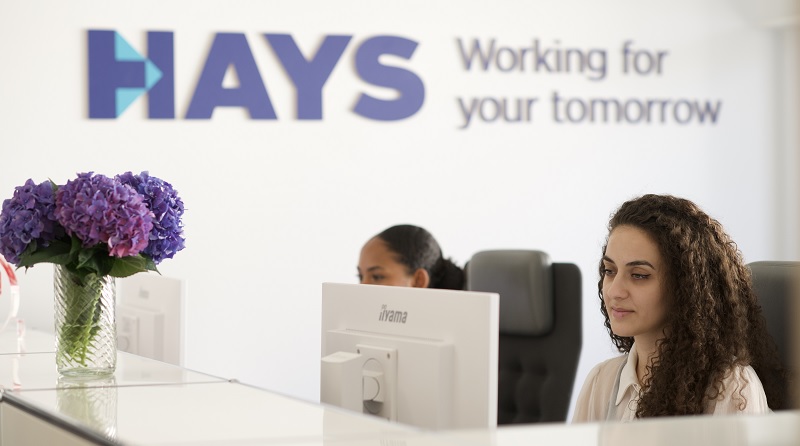
Hays says that a recently completed software upgrade is freeing up thousands of hours per month for its employees.
London-based Hays is one of the world’s largest recruiting firms. Its staffers fill more than 1,000 positions per day across 16 countries, mainly in white-collar fields such as accounting and engineering. The company closed its most recent fiscal year with £6.42 billion in revenue.
Like most large enterprises, Hays is a long-time Microsoft 365 user. The firm adopted Copilot, an AI assistant built into the productivity suite, not long after its release. This past June, Hays decided to significantly expand its use of Microsoft’s machine learning features. It switched its Microsoft 365 environment to the top-end E7 tier of the productivity suite.
An E7 seat sells for $99 per month, which is ten times more than an entry-level subscription. That sum buys customers numerous cybersecurity tools designed to fend off threats like ransomware. More notably, the subscription includes dozens of AI features. Those capabilities were the primary focus of Hays’ software upgrade.

“At Hays, AI is central to how we’re transforming recruitment for our clients, candidates and consultants,” Hays Global CEO Mark Dearnley told Boardroom Insight. “The AI innovation tools we’re deploying include Microsoft Copilot, AI agents embedded within our own platforms, and capabilities that help colleagues access knowledge more quickly, automate routine tasks and work more effectively. Together, they’re freeing consultants from administrative work such as candidate registration, timesheets and invoicing, so they can spend more time on what actually drives value: advising clients, understanding candidates and making the right placements.”
One of the main highlights of Microsoft 365’s AI feature set is a tool called Copilot Studio. In its announcement of the E7 rollout, Hays specifically listed the tool among the modules that it has adopted. Copilot Studio enables non-developers to build custom AI agents. Those agents can interact with data in not only Microsoft 365 but also external services. Furthermore, users can link together multiple AI agents into complex automation workflows.
E7 pairs Copilot Studio with various auxiliary tools. Agent 365 enables IT teams to centrally monitor AI agents for cybersecurity issues. Administrators can use Entra, the Microsoft product formerly known as Active Directory, to limit which agent can perform what task. Another module called Work IQ organizes business data into a form that employees’ AI agents can easily ingest.
“This isn’t about replacing expertise with automation,” Dearnley explained. “It’s about giving our people better tools to move faster and serve clients better, from smarter meeting support and faster access to knowledge, to sharper candidate matching and candidate engagement. Recruitment has always been a people business, and it will remain one. AI is helping our consultants do what they do best, more productively, and that combination of human expertise and AI-enabled efficiency will be a key differentiator in the future of recruitment.”
Hays started rolling out E7 across its 200-plus offices at the beginning of June. It onboarded more than 8,000 employees, the vast majority of its workforce, within a few days. The firm subsequently asked 1,000 users to share feedback about the software. Hays says that 77% of the respondents reported saving more than an hour of work per week. That adds up to thousands of hours per month, a data point Microsoft’s salespeople will no doubt put to good use in their lead presentations. E7 is a relatively new product, having launched in May of this year, which means that case studies from major multinational brands come quite handy.
The time savings that AI tools like Copilot Studio can unlock for workers are only likely to increase from here. Mainstay productivity applications don’t yet have access to AI labs’ latest and greatest LLMs, which found a bug in the equations that engineers use to model the motion of liquids and solved multiple Erdős problems in the past six months alone.
Photos courtesy of Hays